For communities planning new or expanded water supply infrastructure, the choice between surface water and groundwater is one of the most consequential decisions in the capital planning process. It is not simply a technical decision about treatment processes or source availability. It is a strategic decision about risk, resilience, capital structure, operating cost, and long-term reliability under a changing climate.
Yet this decision is frequently made on the basis of incomplete analysis. The source that is most readily available, or the one with which local engineers are most familiar, tends to receive more detailed evaluation than available alternatives. The whole-life cost comparison between surface water and groundwater development, accounting for the different treatment requirements, operating costs, and risk profiles of each, is rarely conducted with the rigour it deserves.
In the current infrastructure environment, where US water systems need approximately $625 billion in investment by 2041 and communities are making infrastructure commitments that will shape their water security for generations, this analysis matters more than ever.
The Treatment Cost Differential
Surface water and groundwater differ fundamentally in their treatment requirements. Groundwater, filtered through geological formations, is typically lower in turbidity and microbial content than surface water, though it may require treatment for specific dissolved contaminants including hardness, iron, manganese, and in some regions arsenic, nitrates, or emerging contaminants.
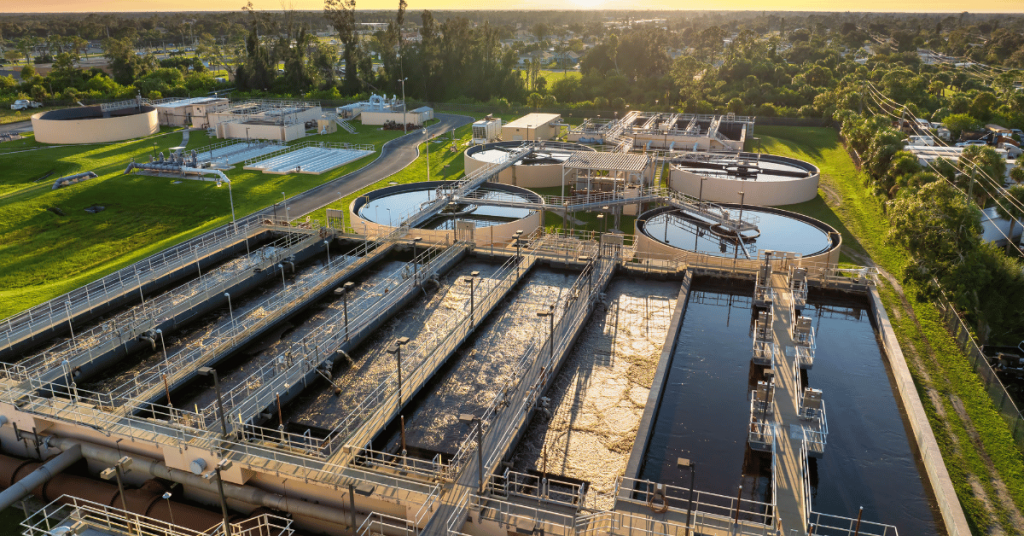
Surface water treatment for pathogen removal, turbidity, natural organic matter, and increasingly for HABs, PFAS, and other emerging contaminants, typically requires a more complex treatment train than groundwater treatment. The ASCE’s analysis of US water infrastructure notes that roughly 140 million Americans rely on groundwater for drinking water, often at lower treatment cost than comparable surface water systems. However, groundwater supply from public sources requires approximately 31% more electricity than surface water supply, mainly due to greater pumping requirements from deeper aquifers.
The treatment cost differential between surface and groundwater is therefore not simply in favour of groundwater. It depends on the specific characteristics of each source, the treatment objectives that need to be met, and the energy cost of water extraction from the groundwater source. A rigorous comparison requires evaluating both options at engineering-quality detail, not at planning-level approximation.
Climate Risk and Source Resilience
Climate change is altering the strategic attractiveness of surface water and groundwater sources in different ways, and the direction is not uniform.
Surface water sources are highly sensitive to climate variability. Drought reduces flows and concentrates pollutants. Intense rainfall increases turbidity and contaminant loads. Temperature increases promote algal growth and change the effectiveness of treatment processes. Research from USP and INPE on Brazil’s aquifer recharge shows that climate change projections indicate potential significant reductions in groundwater recharge across much of Brazil and other regions with similar climate trajectories. The picture is not straightforwardly better for groundwater in a warming climate.
The most resilient supply strategy for many communities is not exclusive reliance on either source, but a diversified approach that uses both. Conjunctive use, drawing on surface water when conditions are favourable and groundwater during droughts or high-turbidity periods, provides a level of supply security that neither source alone can offer. EPA guidance on water utility resilience identifies aquifer storage and recovery as one of the most effective resilience measures available to surface water-dependent utilities, noting that building groundwater reserves during wet periods provides supply security during droughts.
Capital Structure and Long-Term Affordability
The capital investment required to develop each source type differs significantly. Surface water treatment plants typically require larger capital investment but may draw from sources with higher yield capacity. Groundwater systems may require lower treatment capital but higher drilling, pumping, and infrastructure investment depending on depth and geology.
For growing communities, the scalability of each option is an important consideration. Surface water treatment plants can often be expanded more flexibly than groundwater systems, which depend on aquifer yield capacity that may be limited. But in regions where surface water is seasonally variable, the storage and treatment capacity needed to provide reliable year-round supply may require larger capital investment than a groundwater system would.
These tradeoffs are highly specific to local conditions and require detailed, engineering-quality analysis to evaluate properly. Generative design platforms that can rapidly generate and compare preliminary designs for both surface water and groundwater treatment infrastructure, each with detailed CAPEX and OPEX analysis, provide communities with the analytical foundation for making this strategic decision on the basis of comparable, rigorous data rather than planning-level assumptions.
The Role of Digital Planning in Source Selection
Source selection for new water supply infrastructure is one of the highest-leverage decisions in a community’s capital planning process. Getting it right produces benefits that compound across 30 to 40 years of infrastructure operation. Getting it wrong creates costs and risks that are expensive to unwind.
The Transcend Design Generator supports this decision by making it practical to evaluate both source options at engineering quality, with detailed treatment train design, CAPEX and OPEX analysis, and comparative risk profiles, before the decision is made. This is the standard of analysis that a decision of this magnitude deserves, and that digital planning tools make accessible at planning speed and cost.
The communities that make source selection decisions on the basis of rigorous, engineering-quality comparative analysis will build water infrastructure that serves them well across the full range of conditions they will face over the coming decades. Those that default to the familiar option without comprehensive evaluation are assuming risks that analytical rigour could have identified and managed.
To explore how Transcend supports strategic infrastructure source selection and comparative planning for water supply utilities, visit transcendinfra.com/capitalplanning.