New Zealand’s Wastewater Standards Are Tightening. Here’s What a Faster Planning Process Could Look Like.
Watercare’s $15.2 billion, ten-year infrastructure programme. IAWAI’s $3.6 billion investment plan for a water services entity that didn’t exist before 2026. Christchurch City Council’s $3.8 billion, ten-year investment across its three waters network, roading, and transport. Across New Zealand, councils and water services providers are entering the largest wave of wastewater and drinking water investment in a generation, under Local Water Done Well reform, tightening Wastewater Environmental Performance Standards, and closer oversight from Taumata Arowai.
Major investment in this sector was always coming. The real question for the teams planning it is how many credible infrastructure pathways get evaluated, how thoroughly, and how fast, before capital and resource consent applications are committed to one direction.
What We Modeled
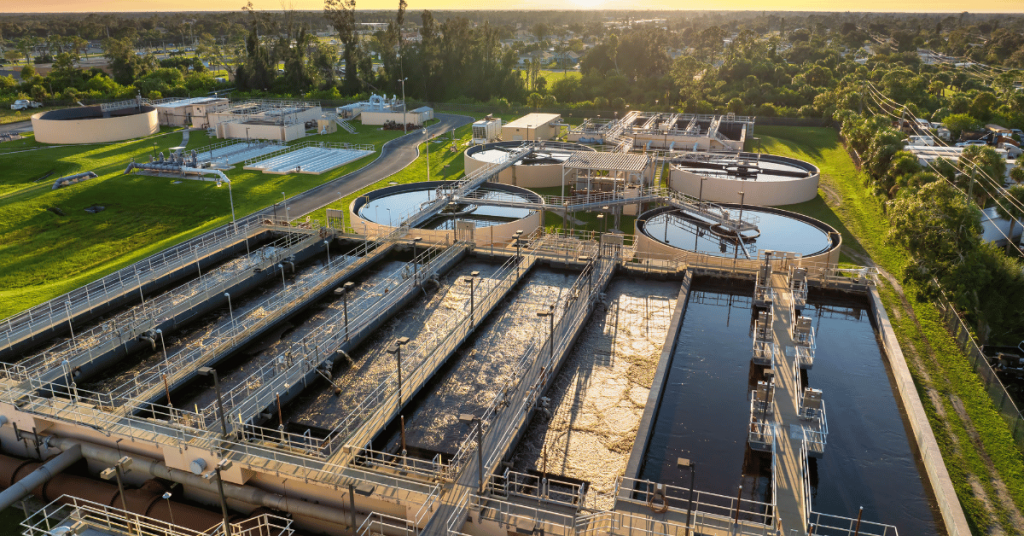
We used Christchurch’s Bromley Wastewater Treatment Plant as the starting point for a conceptual engineering optioneering exercise in the Transcend Design Generator (TDG). Bromley is a genuinely mature facility: extended treatment processes, trickling filters, and oxidation ponds layered together over decades of modernization, the kind of operational history you’d expect from a plant that has been taken seriously and adapted repeatedly, not one running on inertia. The 2021 plant fire added a sharper edge to that history, a reminder of why resilience and redundancy planning matter for assets carrying this much of a catchment’s load.
Working from that context, we built a future-focused “New Bromley Plant” concept: a full membrane bioreactor configuration using DuPont B50N and MemPulse membrane technology, targeted against stricter-than-typical effluent objectives to see how higher-performance requirements would shape footprint, sizing, and long-term operational flexibility. This is a conceptual exercise, not a proposal Christchurch City Council has adopted, and it was never intended as one.
One Workflow, Every Discipline
The technology choice wasn’t the point of the exercise. What came out alongside it was.
Running the Bromley concept through TDG produced coordinated outputs across process, civil, and mechanical engineering in a single pass: process simulation and hydraulic balancing, membrane and sludge handling sizing, Revit-ready civil layouts, and equipment and instrumentation data, all generated from the same underlying design rather than rebuilt by hand across separate tools.
That matters more in a reform environment than it might have five years ago. Resource consent timelines, community consultation windows, and funding cycles are fixed constraints councils and water services providers have to plan around, not variables to trade against rigor. A workflow that produces engineering-grade, cross-discipline data in one pass means more real options can be evaluated inside those fixed windows, on the same footing, with a record that holds up when a decision gets questioned later.
What This Means If You’re Planning the Next One
Under Local Water Done Well, capital planning decisions are going to be revisited, by councillors, by communities, by Taumata Arowai. A defensible planning record isn’t paperwork. It’s what lets a wastewater network operator show how a decision was reached, not just what the decision was.
What an exercise like Bromley shows is that evaluating a genuinely different, fully engineered configuration doesn’t have to cost months. It can sit alongside whatever pathway is already on the table, built with the same data discipline, ready to compare against real catchment conditions and performance targets rather than assumptions carried over from the last plant that got built.
If your team is comparing treatment configurations for a growth catchment or capital renewal programme of your own, explore a New Zealand-context design example to see how conceptual outputs from TDG can reflect local planning requirements and regional standards, or book a consultation to walk through what a design package could look like for your site.
We ran a similar conceptual optioneering exercise for a growth corridor in Western Sydney, see what a faster planning process looked like there.