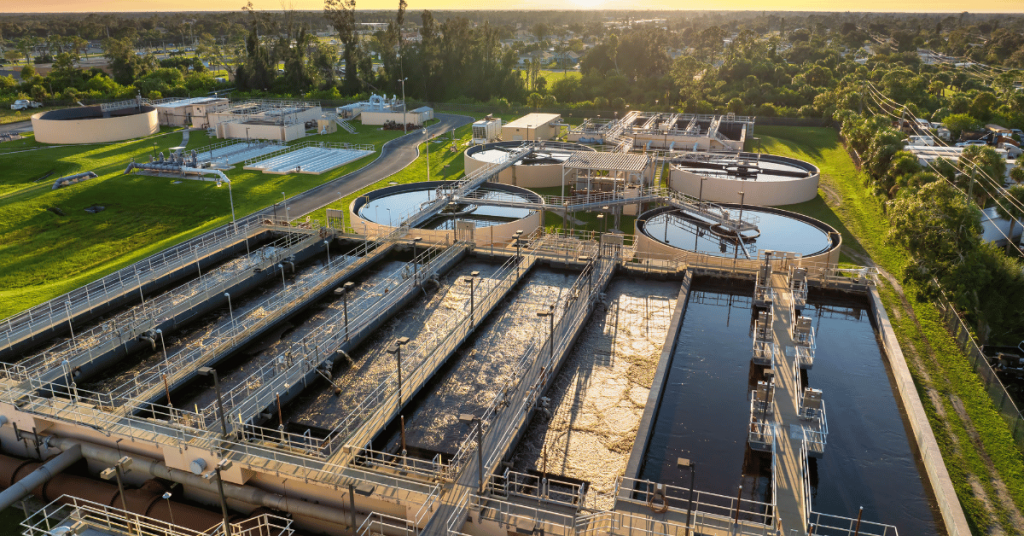
In August 2014, half a million residents of Toledo, Ohio were told not to use their tap water for two days. The cause was a harmful algal bloom in Lake Erie that produced microcystin toxins at concentrations exceeding safe drinking water limits. The city’s treatment plant, built before World War II and designed primarily for particulate removal, was not equipped to handle the toxin breakthrough. The economic and public health consequences were severe, and the reputational damage to the water system lasted years.
Toledo was not an isolated incident. EPA research on HABs and drinking water treatment documents a pattern of HAB-related challenges at treatment facilities drawing from surface water sources across the United States. Microcystins have been detected in raw water at approximately 74% of monitored public water systems. As water temperatures rise due to climate change, research projections indicate that cyanobacterial bloom concentrations are likely to increase across much of the contiguous United States and globally.
For engineers planning new or upgraded surface water treatment facilities, harmful algal blooms are no longer an exceptional event to be managed through emergency response. They are a design parameter that needs to be incorporated into the baseline specification of every facility drawing from a susceptible surface water source.
Understanding the HAB Treatment Challenge
Harmful algal blooms create a dual treatment challenge that is more complex than conventional particulate treatment. The first challenge is removing algal cells from the water column without lysing them, as lysed cells release intracellular toxins that are significantly harder to remove than cell-bound toxins. The second challenge is removing the extracellular toxins and taste-and-odour compounds that have already been released into the water.
Conventional treatment, coagulation, sedimentation, and filtration, is reasonably effective at removing intact algal cells if process conditions are optimised for the purpose. But it is not reliably effective at removing dissolved cyanotoxins, which pass through conventional treatment barriers. EPA guidance on HAB treatment identifies powdered activated carbon (PAC) as one of the most accessible and effective tools for toxin removal in drinking water treatment, but its effectiveness depends on proper dosing, which in turn requires understanding the specific cyanotoxin species and concentrations present in the source water.
Ozone and advanced oxidation processes provide more robust toxin removal but require capital investment in treatment infrastructure that many existing plants do not have. UV treatment is effective for some cyanotoxins but not others. And the multi-barrier approach, combining physical removal with oxidation and adsorption, is generally most reliable but also most capital-intensive.
Design Implications: Treatment Train Flexibility
The most important design principle for surface water treatment facilities in HAB-susceptible catchments is treatment train flexibility. A facility that is designed with only one treatment pathway, without provisions for activating additional barriers during bloom events, will face difficult choices when a bloom develops: operate outside of optimal conditions, issue advisory notices, or invest in costly emergency retrofitting.
Good design for HAB resilience incorporates several elements. Pre-oxidation capacity, using ozone or chlorine dioxide, that can be activated before coagulation during bloom events to damage algal cell membranes and improve coagulation efficiency. PAC dosing infrastructure that can be deployed flexibly when dissolved toxins are detected. Ozonation capacity that can provide a robust barrier for toxin removal. And monitoring and real-time control systems that enable operators to respond to changing source water conditions quickly enough to prevent toxin breakthrough.
Each of these elements adds capital cost, and the incremental cost needs to be evaluated against the risk of not having the capability when it is needed. This is a CAPEX optimisation exercise that requires engineering-quality analysis of multiple treatment configurations, tested against the range of HAB scenarios the facility is likely to face. Platforms like the Transcend Design Generator can support this kind of multi-scenario analysis, generating detailed cost and performance data for treatment configurations with different combinations of HAB-treatment capabilities.
Early-Stage Design: Where the Most Important Decisions Are Made
The most consequential decisions about HAB resilience are made at the conceptual and preliminary design stage, before detailed engineering begins. The choice of treatment technology, the sizing of unit processes, and the provision for future treatment flexibility are all established at this stage, and they are expensive to reverse once detailed design and procurement are underway.
This makes the quality of the early-stage design process critical. A conventional approach that evaluates a small number of treatment alternatives, under time and resource pressure, may not fully explore the options available for building HAB resilience into the treatment train. A generative design approach that can rapidly evaluate many more alternatives, each with engineering-quality CAPEX and OPEX analysis, is more likely to identify the optimal combination of HAB-treatment capability, operational flexibility, and capital cost.
Monitoring and Adaptive Management
Good facility design is a necessary but not sufficient condition for managing HAB risks in surface water treatment. Facilities also need monitoring systems that provide early warning of bloom development upstream of the intake, and operational protocols that allow treatment processes to be adapted quickly when bloom conditions are detected.
The EPA’s CyAN near-real-time cyanobacterial biomass tool is used by state and tribal partners across the US as part of their HAB monitoring programmes. As forecasting capabilities improve, utilities will have increasing ability to anticipate bloom events before they reach treatment intakes, providing valuable lead time to adjust treatment processes.
The combination of better monitoring, more capable treatment design, and operational flexibility represents the most robust approach to managing the growing HAB challenge in surface water treatment. Getting the design right from the beginning, with the analytical rigour that scenario-based generative design supports, is the foundation of that combination.
To explore how Transcend supports surface water treatment plant design for variable and challenging source water conditions, visit transcendinfra.com.