Sydney’s Wastewater System Is Running Out of Time. Here’s What a Faster Planning Process Could Look Like.
Western Sydney’s wastewater system has a deadline. Without new capacity, the Northern Suburbs Ocean Outfall Sewer and North Head Water Resource Recovery Facility, the two assets currently carrying wastewater for roughly 1.7 million people across the Greater Parramatta and Olympic Peninsula corridor, will hit capacity and compliance limits by 2031.
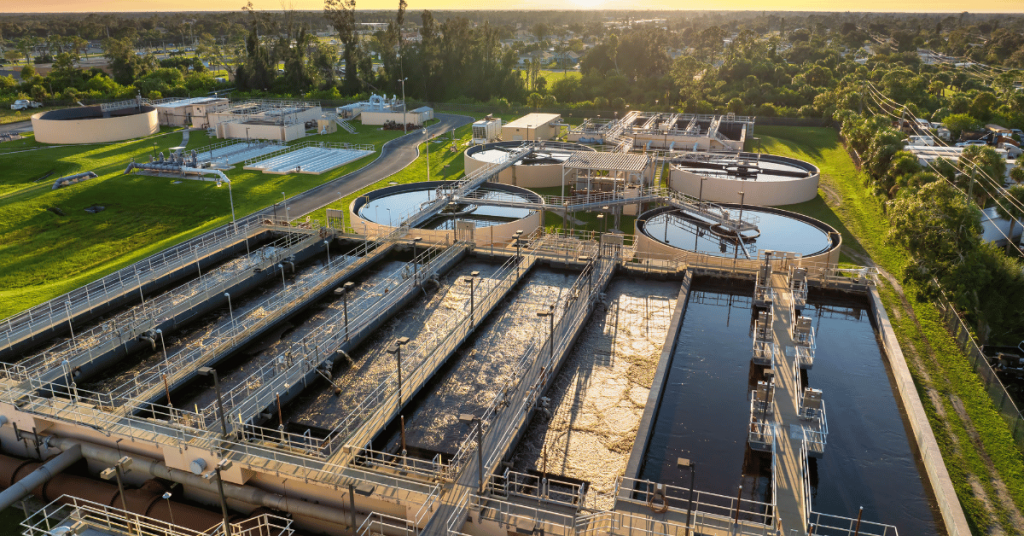
Sydney Water’s answer is already in motion. A new Water Resource Recovery Facility proposed for the Camellia-Rosehill industrial precinct would divert flow from the Camellia pumping station, currently carrying around a quarter of North Head’s load, and treat it locally before releasing advanced treated water to the Parramatta River. The project is now under environmental impact assessment as state significant infrastructure, with construction targeted between 2028 and 2031. Reporting on the proposal puts the avoided cost of duplicating the coastal trunk sewer at around $5 billion, which gives some sense of what’s riding on this option working.
That’s the real backdrop. For asset owners watching this corridor, the question isn’t whether more treatment capacity is coming to Western Sydney. It’s how many credible configurations get evaluated, how thoroughly, and how fast, before capital gets committed.
What We Modeled
We used the GPOP planning context as the input for a conceptual exercise in the Transcend Design Generator: a 150,000 m³/d Water Resource Recovery Facility, sized against a peak daily flow of 450,000 m³/d, positioned as a future-ready augmentation concept for the corridor’s continued growth. This is not Sydney Water’s design. It’s our own test of how quickly a coordinated, multi-discipline infrastructure concept can move from a planning headline to engineering-grade output.
For this run, we built the facility around a Membrane Bioreactor process using DuPont’s MemPulse MBR technology. That choice matters for a corridor like GPOP, where the treatment site sits inside an established industrial precinct and footprint is a real constraint, not an abstraction. Submerged membrane filtration replaces the secondary clarifier entirely, and the resulting effluent quality gives an asset owner more headroom against tightening discharge limits and future water reuse ambitions.
The concept was built around a four-stage Bardenpho configuration for total nitrogen removal, feeding two biological trains and twelve MemPulse membrane trains with one held in standby. Against the influent loads we set, the design achieves a Total Phosphorus limit of 2 mg/l, Total Nitrogen of 10 mg/l, Total Suspended Solids of 10 mg/l, and BOD5 of 10 mg/l, with ferric chloride dosing added to close the phosphorus gap. UV disinfection ahead of discharge closes out pathogen removal.
One Workflow, Every Discipline
The part of this exercise most relevant to an asset owner isn’t the treatment train itself. It’s what came out alongside it.
Running this concept through TDG produced coordinated outputs across process, civil, and mechanical engineering in the same workflow: process flow diagrams, simulation-driven mass balances, and operational data on one side; site layouts and Revit-ready infrastructure models on the other; equipment lists, valve and instrumentation data, and quantity takeoffs rounding it out. None of it was rebuilt by hand between disciplines. It came from the same underlying design.
That’s the actual shift for capital planning teams. Regulatory timelines, community consultation windows, and funding cycles are fixed constraints an asset owner has to plan around, not variables to trade against rigor. A workflow that produces engineering-grade, cross-discipline data in one pass means those fixed windows can hold more real options inside them, evaluated on the same footing, rather than one option pursued in depth while alternatives get waved through on assumption.
What This Means If You’re Planning the Next One
Capital planning for a facility with a multi-decade service life shouldn’t lock in on the first workable configuration, and it shouldn’t need to choose between speed and thoroughness to avoid that trap. A corridor like Greater Parramatta, with its own funding profile, site constraints, and growth trajectory, deserves a design process built around its specific conditions rather than a template carried over from elsewhere.
What an exercise like this GPOP concept shows is that a fully engineered, multi-discipline alternative doesn’t have to cost months to stand up. It can sit alongside whatever configuration is already on the table, built from the same data discipline, ready to compare on real numbers rather than best guesses.
If your team is weighing treatment technology options for a growth corridor of your own, explore how Transcend’s wastewater treatment design tools handle MBR, CAS, and other configurations, or book a consultation to walk through what a design package for your site could look like.