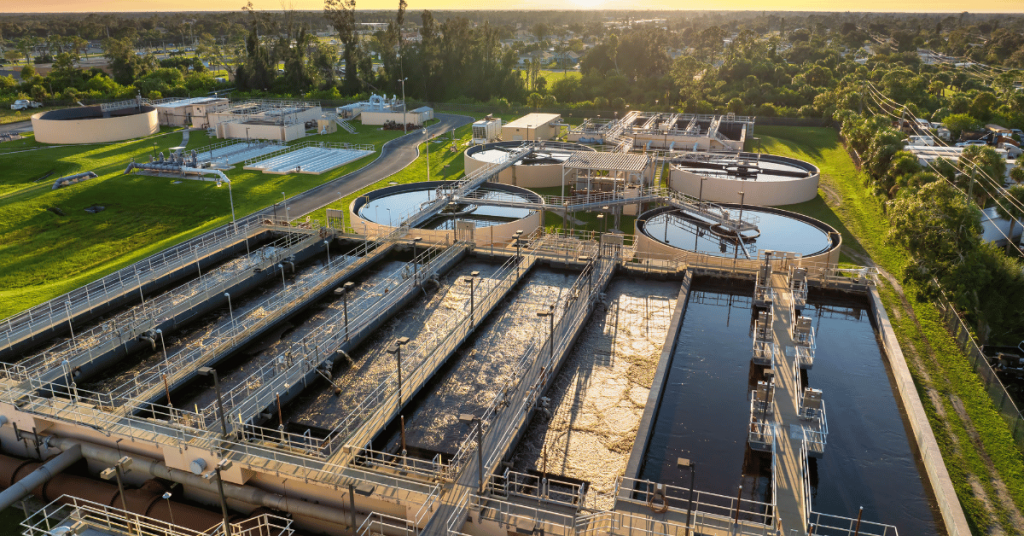
Coagulation and flocculation are the workhorses of surface water treatment. For more than a century, these physical-chemical processes have been the primary mechanism by which utilities remove turbidity, colour, natural organic matter, pathogens, and other particles from surface water before filtration. They are well understood in principle, reliably effective when well designed and operated, and present in virtually every surface water treatment plant in the world.
They are also among the most sensitive and variable-dependent processes in the treatment train. The optimal coagulant type, dose, and mixing conditions change with source water temperature, turbidity, pH, alkalinity, natural organic matter concentration, and the presence of specific contaminants. A coagulation system that performs excellently under average conditions may perform poorly during the seasonal and event-driven variations that characterise surface water sources. And a coagulation system designed for historical source water conditions may not perform well under the conditions that climate change and land use change are generating.
Optimising coagulation and flocculation for the full range of conditions a surface water facility will face is therefore not just a matter of selecting the right technology. It requires careful analysis of the source water variability the plant will experience, the treatment objectives that need to be met across that variability, and the design and operational parameters that will reliably achieve those objectives.
The Sources of Coagulation Variability
Source water variability is the primary driver of coagulation system performance variability. Several parameters are particularly important.
Temperature is a fundamental variable. Lower temperatures reduce the kinetic efficiency of coagulation reactions, requiring higher coagulant doses and longer flocculation times to achieve the same particle removal. Treatment plants in regions with significant seasonal temperature variation need coagulation system design that accommodates the range of temperatures they will experience, not just the average.
Natural organic matter (NOM) concentration and character is another critical variable. NOM competes with inorganic particles for coagulant, consuming dose that would otherwise be available for particle removal. As NOM concentration increases, coagulant demand increases disproportionately. And the character of NOM, its molecular weight distribution and hydrophobic/hydrophilic balance, affects how much coagulant is required and which coagulant type is most effective.
Alkalinity and pH affect coagulant chemistry directly. Most metal salt coagulants hydrolyse to form iron or aluminium hydroxide precipitates that carry particle charge; the efficiency of this hydrolysis depends on the pH and alkalinity of the source water. Treatment plants drawing from source waters with low alkalinity may need pH adjustment to achieve optimal coagulation, and changes in source water alkalinity over time affect the coagulant dose required.
Design Approaches for Optimised Coagulation
Several design elements are particularly important for coagulation and flocculation system optimisation.
Coagulant selection should be based on testing across the full range of source water conditions the plant will face, not just the average or design day condition. Jar testing, conducted with source water samples representative of the seasonal and event-driven variability, provides the data needed to select the coagulant and dose range that performs best across the range of conditions.
Rapid mix design significantly affects coagulation efficiency. Adequate energy input during rapid mixing is essential for dispersing coagulant and initiating particle destabilisation, but excessive energy can break up forming flocs. The optimal rapid mix conditions vary with source water characteristics, particularly temperature and particle concentration. Inline static mixers or mechanical rapid mix units with variable energy input provide more flexibility than fixed configurations.
Flocculation system design needs to accommodate the range of floc characteristics that different source water conditions produce. Slow-growing, fragile flocs, characteristic of low-turbidity source water with high NOM, require different flocculation conditions than fast-growing, robust flocs from high-turbidity source water. Tapered flocculation, with higher energy input in early stages and lower energy in later stages, is more effective across a wider range of conditions than single-speed configurations.
Monitoring and control systems are increasingly important for coagulation optimisation. Real-time streaming current monitoring, which measures the charge state of colloidal particles in the coagulated water, provides feedback that enables automated coagulant dose adjustment as source water conditions change. This kind of online process control significantly improves coagulation performance under variable conditions compared to time-delayed jar testing feedback alone.
The Role of Digital Design in Coagulation System Optimisation
Coagulation and flocculation design involves a large number of interacting variables, and the optimal configuration for one set of source water conditions may not be optimal for others. Evaluating the full range of design options, across the full range of source water conditions a plant will face, is analytically intensive work that conventional manual design processes do not support well under time pressure.
Generative design platforms that incorporate accurate models of coagulation performance across different source water parameters can evaluate multiple design configurations against a range of source water scenarios, identifying the configuration that performs most robustly across the conditions the plant will actually experience. The Transcend Design Generator supports this kind of multi-scenario evaluation for surface water treatment process design, enabling engineering teams to make better-informed decisions about coagulation and flocculation system design from the earliest stages of project development.
Operational Optimisation and Continuous Improvement
Even the best-designed coagulation system requires ongoing operational optimisation to maintain peak performance as source water conditions change over time. Regular jar testing, online monitoring, and operator training in coagulation chemistry all contribute to maintaining the performance that good design enables.
Increasingly, utilities are using data analytics and machine learning tools to identify patterns in the relationship between source water quality parameters and optimal coagulant dose, building operational intelligence that improves performance over time. These tools complement good design rather than substituting for it: they can optimise the operation of a well-designed system, but they cannot compensate for fundamental design constraints that limit the system’s operational flexibility.
The combination of sound coagulation system design and effective operational optimisation is what produces reliably excellent surface water treatment performance across the full range of conditions a plant will face over its operational life.
To explore how Transcend supports optimised surface water treatment process design, visit transcendinfra.com.