Climate resilience in surface water treatment infrastructure is no longer a forward-looking aspiration. It is an immediate practical requirement. The infrastructure being committed to today will operate for 30 to 40 years under climate conditions that are already diverging from the historical baseline, and that divergence is accelerating. Building climate resilience into treatment plants from the design stage is substantially less expensive than retrofitting it after commissioning, and far less expensive than managing the operational and public health consequences of treatment plants that fail to perform under conditions they were not designed for.
But climate resilience is not a single design feature that can be added to a treatment plant. It is a property that emerges from multiple design decisions, each of which contributes to the plant’s ability to maintain treatment performance across a wider range of conditions than conventional designs typically accommodate. Understanding which of those decisions matter most, and what they cost relative to the risk they mitigate, requires the kind of multi-scenario analytical rigour that generative design platforms make practical.
The Three Dimensions of Climate Resilience in Surface Water Treatment
Climate resilience in surface water treatment has three distinct dimensions that design needs to address.
The first is source water quality resilience: the ability to maintain treatment performance as source water quality changes, both in the short term, during extreme events like storm turbidity spikes and HAB occurrences, and in the longer term, as climate trends alter the baseline quality of the source. This dimension is addressed through treatment flexibility, process capacity, and operational adaptability.
The second is physical infrastructure resilience: the ability of treatment plant structures, equipment, and systems to continue functioning during and after climate-related extreme events. The EPA’s guidance on water utility resilience identifies flooding, drought, and extreme heat as the primary physical resilience challenges for treatment facilities, and recommends specific infrastructure measures including flood protection, backup power, and chemical storage for extended operation during supply chain disruptions.
The third is operational resilience: the ability of the plant’s operating systems, monitoring infrastructure, and staffing model to maintain service continuity during climate-related events that may simultaneously affect the treatment plant, the water source, and the wider utility’s operations. Operational resilience depends on good design but also on operational planning, staffing, and the availability of real-time monitoring data.
Key Design Features for Climate-Resilient Surface Water Treatment
Several design features consistently appear in climate-resilient surface water treatment plant specifications.
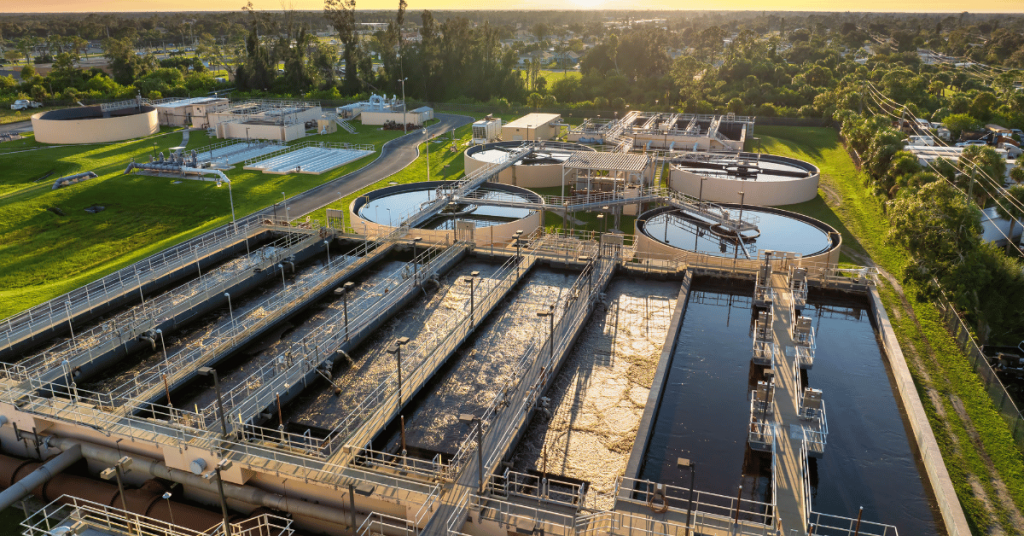
Process redundancy ensures that treatment performance can be maintained when individual process units are offline for maintenance, cleaning, or repair, particularly during high-demand periods that may coincide with climate-related challenges. For surface water plants, key redundancy considerations include multiple filter cells that allow individual cells to be taken offline without compromising overall treatment capacity, redundant chemical dosing systems for coagulation and disinfection, and backup power supply for critical process equipment.
Treatment flexibility, as discussed elsewhere in this series, ensures that the plant can adapt to a range of source water conditions. For climate resilience specifically, this means the ability to increase disinfection dose during high-turbidity events, to activate advanced treatment barriers when HABs are detected, and to adjust treatment process settings as seasonal source water conditions change.
Flood protection is increasingly important for plants located in floodplains or coastal areas. The EPA’s guidance recommends assessing flood risk based on projected future conditions, not just historical flood extents, and designing protection measures accordingly. For surface water plants, flood protection needs to consider both direct inundation of plant infrastructure and the impact of high river flows on intake structures and raw water quality.
The Cost of Climate Resilience
A common concern about climate resilience design is its cost. Adding treatment redundancy, flexibility, and physical protection increases capital costs relative to a minimum-specification design. For utilities managing constrained capital budgets, there is pressure to minimise these additions.
The right framework for evaluating climate resilience costs is not the incremental capital cost in isolation. It is the total expected cost over the facility’s operational life, including the cost of climate-related failures, retrofits, and service disruptions that a less resilient design would be more likely to incur. Scenario analysis that quantifies these risk-adjusted costs consistently shows that reasonable investments in climate resilience are cost-effective over the long term, even under conservative assumptions about future climate impacts.
Generative design platforms that can evaluate treatment configurations with different resilience features, across multiple climate scenarios, and produce comparative cost and risk analyses, provide the analytical foundation for these lifecycle investment decisions. The Transcend Design Generator supports this kind of multi-scenario evaluation, enabling planning teams to make evidence-based decisions about which resilience investments are most cost-effective for each specific project context.
To explore how Transcend supports climate-resilient surface water treatment plant design, visit transcendinfra.com.